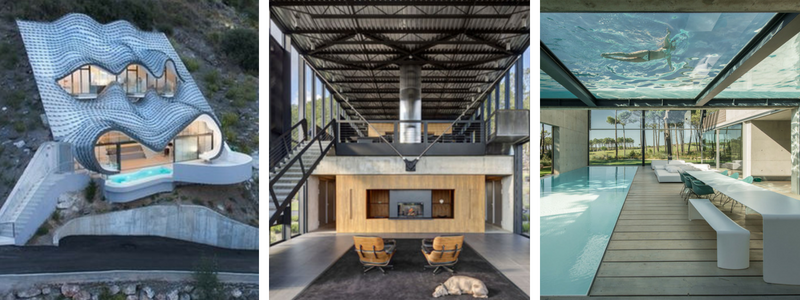
There aren’t too many TV shows that have me sitting up in my chair waiting for more. The World’s Most Extraordinary Homes on Netflix (#extraordinaryhomes) with award-winning architect Piers Taylor (#pierstaylor) and actress/property enthusiast Caroline Quentin (#carolinequentin) however, is that exception.
They both travel the world opening doors, discovering design innovation, passion and the endurance that’s needed to transform architectural vision into an extraordinary home.
This takes me back to one of my first jobs after school. I worked at a leading architectural practice, HDR (formally Rice Daubney) in Sydney, Australia as Office Support and I was exposed to all departments ranging from Architecture + Engineering + Design + Research + Environmental Science and Health. You would have found me in the office scanning massive drawing plans, attending meetings and even onsite with a hard hat and tape measure in hand.
Working here, I understood that every masterpiece had a process. In order to achieve a vision, you had to complete steps in a certain order and challenges will arise. One needs to be flexible and adapt to changes as it’s part of the journey. You can achieve the most unthinkable with the right people and resources.
This role provided the foundation and mindset that everything is possible, which I still carry with me today. My career leads me straight into the world of Event Production and I haven’t looked back.
As I sit on the lounge watching The World’s Most Extraordinary Homes, I’m constantly reflecting on how stunning, unique, and architecturally fascinating these homes are due to the architect’s designs, teams and high-quality materials used.
I see a common thread and a continued overlap of a language used between both industries, which is why I say as a Global Event Producer “producing an event is just like building an extraordinary home”.
Each home followed a particular brief, blending views, the direction of the sun, surroundings, personal taste and out of the box ideas into their designs. It’s the exact same philosophy when following an event brief. You need to understand the purpose of the event, the objectives, audience experience, and post-event deliverables to ensure a “wow” impression and continual theme throughout. I often ask clients… “if you were able to build any house in the world – where would it be, what would it look like, who would you invite over and why this particular design? The client usually gets all excited and starts sharing their dream home with enthusiasm. Then, I ask them to explain their “ideal event brief”. This exercise allows the client to think “bigger” and I ask questions, which allows them to elaborate and enhance their vision. Instantly, I can understand expectations, add value, meaning, and quality to their brand and event.
Event Producers and Architects hold the keys to the kingdom alongside the client. You work directly with vendors to create ideas and build on the vision to achieve the overall dream event (or home). This is one of the main reasons why I love my job so much! Clients trust you to compose everything they have imagined and are proud of. In most cases, you are given free reins to enhance their reputation, brand and, credibility. No matter what type of event you are producing – a conference, a meeting, trade show, festival or even a gala dinner – the event structure is the same. Attendees arrive, need breaks (eat/restroom) and then go home. It’s the experience and in between layers produced that make the event unique and inspirational. Yes, there is a common ground for creating a community feel, a continuous theme, sharing content, culinary and interactive experiences. When you think of building a home, it’s the same as the functions of a basic studio apartment – bathroom, bedroom, living space, a kitchen – it’s the added rooms and character of the property that make it special. This may include adding a garage, on-suite, pool, gym, an alfresco area and more.
I was inspired by Series 1 – Mountain episode, as they were challenged by the environmental landscape when they had a great idea to crane wings and tail fins of a disused Boeing 747 plane to the construction site to create a masterpiece roof on the home. When the architects implement ideas that are innovative, unique and absolutely breathtaking, this is exactly the same with events! To make the event the best, you need to think beyond straightforward and simple ideas. It may increase construction, logistics, and labor but it’s gratifying to come up with new designs and experiences for clients. Over the last year, attendees expect more at events. With new technology and trends leading interactive learnings, demos, you can show attendees the future and enhance their experiences. Attendees expect to play with live floor pianos to make music, experience virtual and augmented reality and even flying drones during their lunch breaks.
My life = looking at project timelines! Architects also manage the property built working from a roadmap that defines each step from start to finish. This allows the project to benefit in multiple ways as it shows a clear indication of tasks, milestones, and priorities in date order. The only way I can manage multiple projects is to review each project timeline weekly. I can instantly see the development of the event schedule, vendors involvement, the event design layout/appearance and when estimated budget reviews will take place. It’s important for the entire team and client to know what to expect in real-time and also see the project progress as tasks are completed. As I watch The World’s Most Extraordinary Homes episodes, I could only imagine how many times they needed to review the project timeline to evaluate big picture implications and solve problems for the right outcome. The conversations and decisions can be quicker and smoother when the timeline is updated and managed from the start. It helps identify gaps, holds and allows smart decisions to be made when adjustments are needed.
You never only see architects on the construction site, they work alongside specialty tradesmen and professionals to complete the build. Event Producers also partner with vendors – audio-visual technicians, graphic designers, venue contacts, chefs, security, photographers, designers amongst many more. Partnering with companies who specialize in a particular expertise enables the overall vision to be achieved, professionalism, increase efficiency, ability to discuss challenges and bring new perspectives to the project.
All projects require contract agreements and each episode showed a reflection of negotiating along the way. In particular Series 1 – Forest was interesting as the architects had to go back and forth negotiating the ancient trees of a fragile forest surrounding the home. I’m always negotiating on behalf of clients, and being reminded of situations that could impact and change the overall property design shows the extra mile you’re required to go. I have actually spent the last week reviewing hotel contracts and communicating on behalf of a client making adjustments to each clause making it mutually agreeable and adding additional rights to protect the client.
Regardless, if an event is being produced for the first time or celebrating its tenth anniversary, there are many complex developments and layers that need to be undertaken to create a dream event (or home). As I watch The World’s Most Extraordinary Homes, I am reminded that we need to voice our brave ideas because it’s magical when they actually come to reality. Each architect was proud of their home, whether it was perched on the edge of a dramatic coastal shoreline with the best views or a home built 1,300 meters up in the Swiss Alps where architecture was influenced by neighboring European countries and dramatic landscapes.
Photo credit: The World’s Most Extraordinary Homes: www.bbc.co.uk

 The Right Up